
PATTERN: THE ART OF REPETITION
APRIL 3 – JUNE 2026
Checkered, paisley, houndstooth, and chevron. Patterns decorate the world through ornament and artifice. Zebra, cheetah, feathers, and flowers. Nature repeats in an array of colors and forms. Patterns reflect the rhythm of life as echoes of the past heard in the present moment.
Hidden within patterns are stories of culture, spirituality, philosophy, and emotion. These stories are literally woven into our lives; embedded into our clothes and architecture. Across place and time, amongst seemingly disparate cultures, similar imagery arises. Often, their core meaning is about the interconnectedness of life. Although the study of patterns can track the migration of people from one place to another, and how their aesthetics merged, it also signals the innately human instinct to depict our world through repetition and rhythm.
Beginning with our cognitive development, repetition functions as an intuitive form of understanding. Our brains utilize pattern recognition as a means of learning. For instance, our ancestors realized that bright colors may indicate poisonous berries and language was built through repeated sentence structures and sounds. It is no wonder why humans have gravitated towards patterns as a means of expression and communication. They connect people across the world through a similarity shared by all.
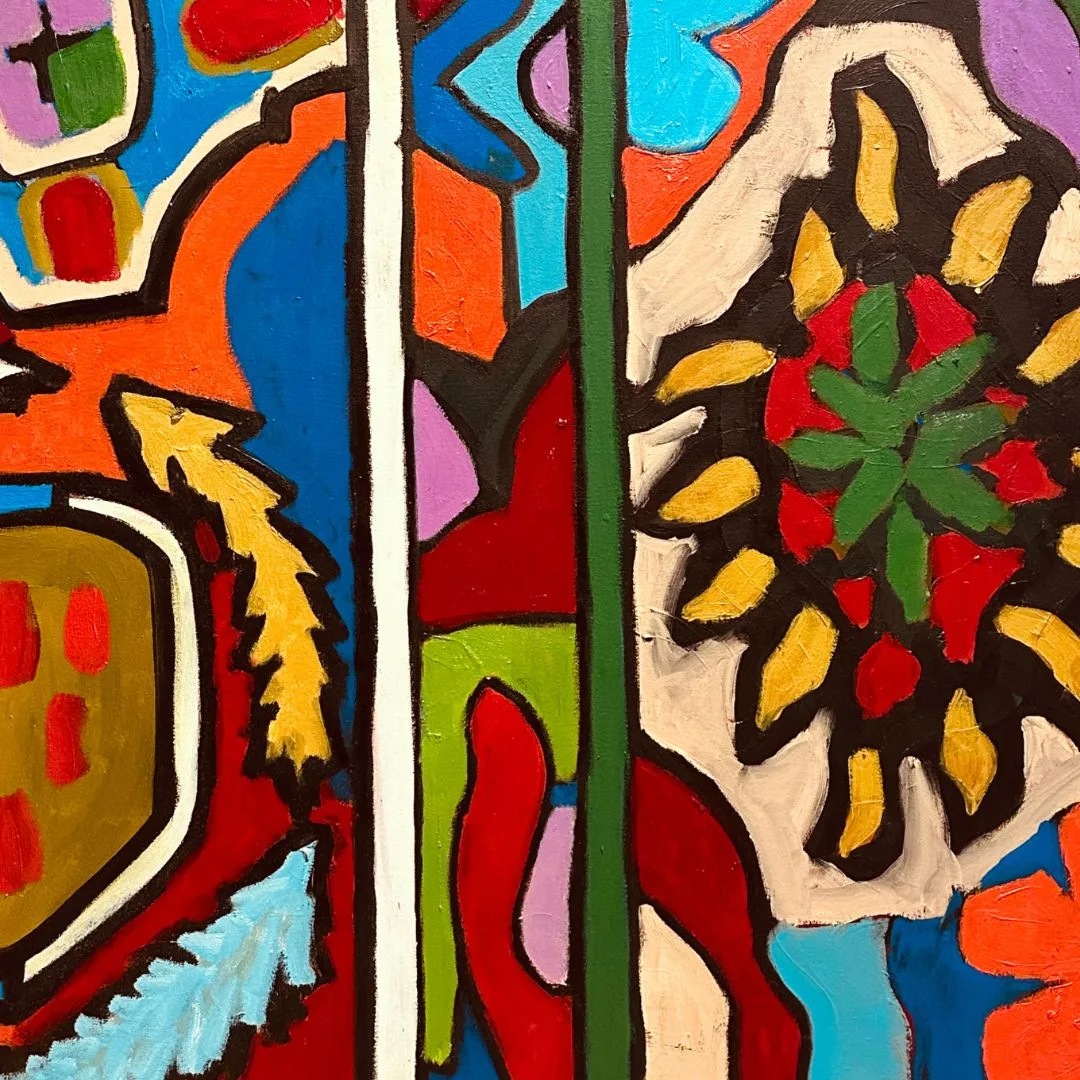
BASMAT LEVIN
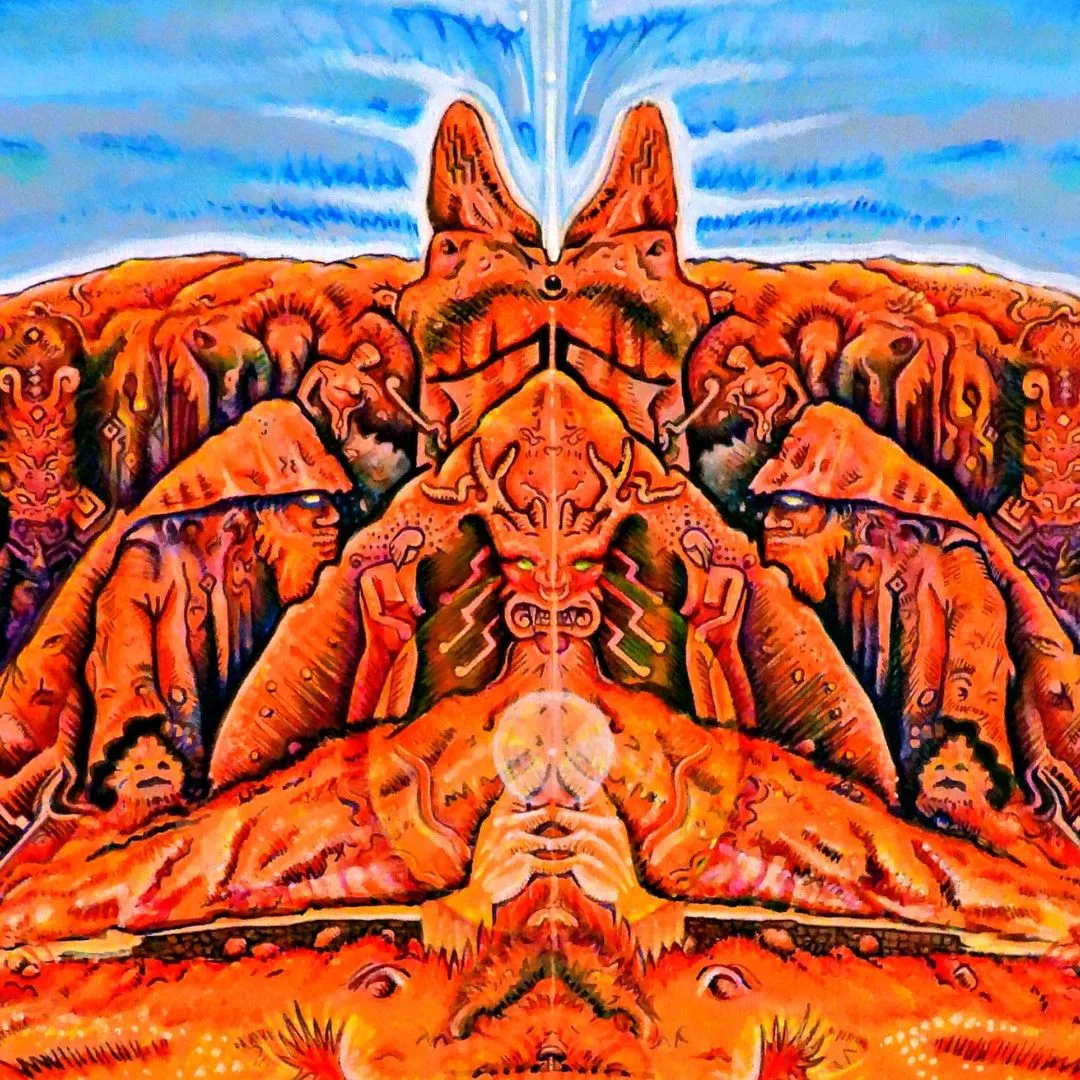
BAYONA
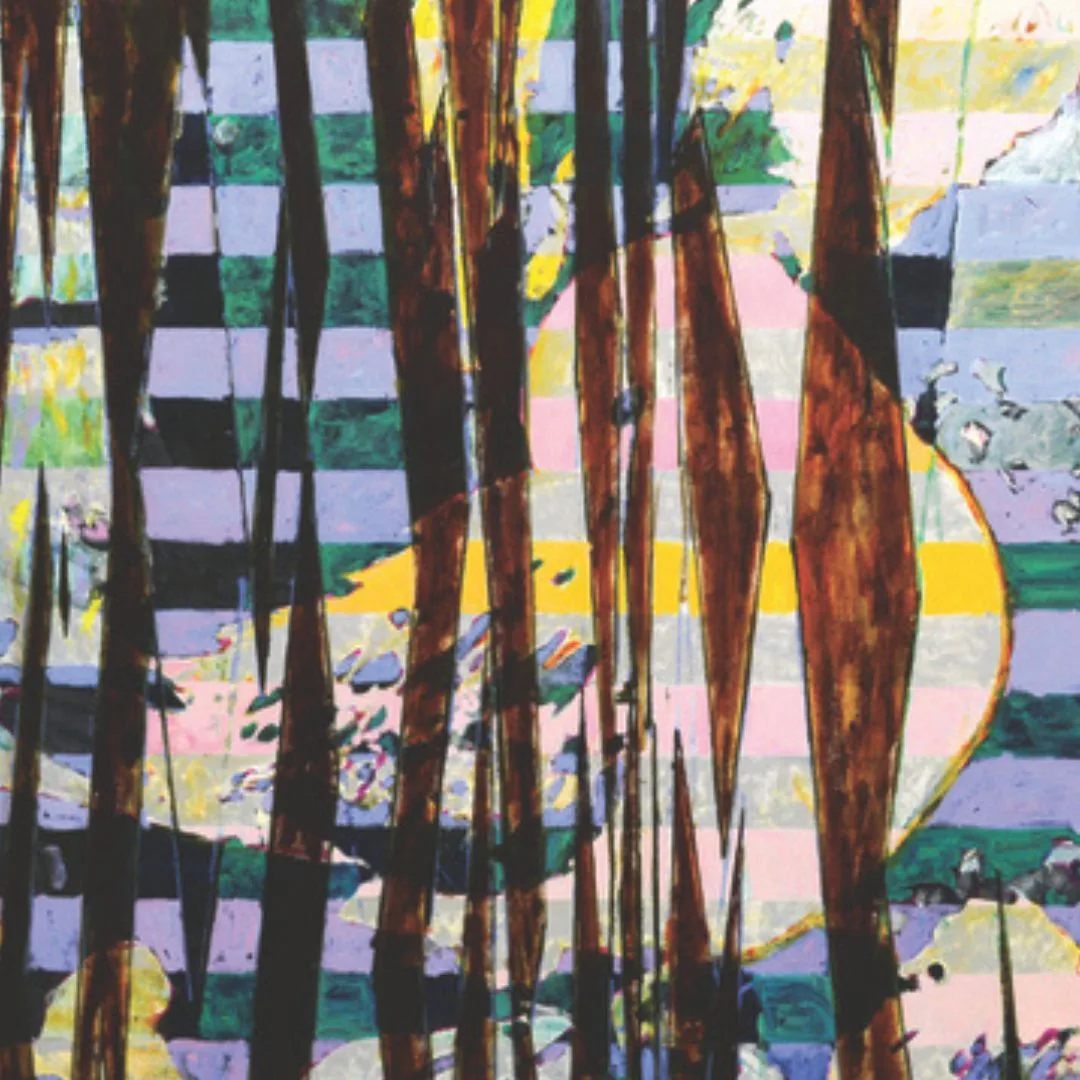
JERED SPRECHER
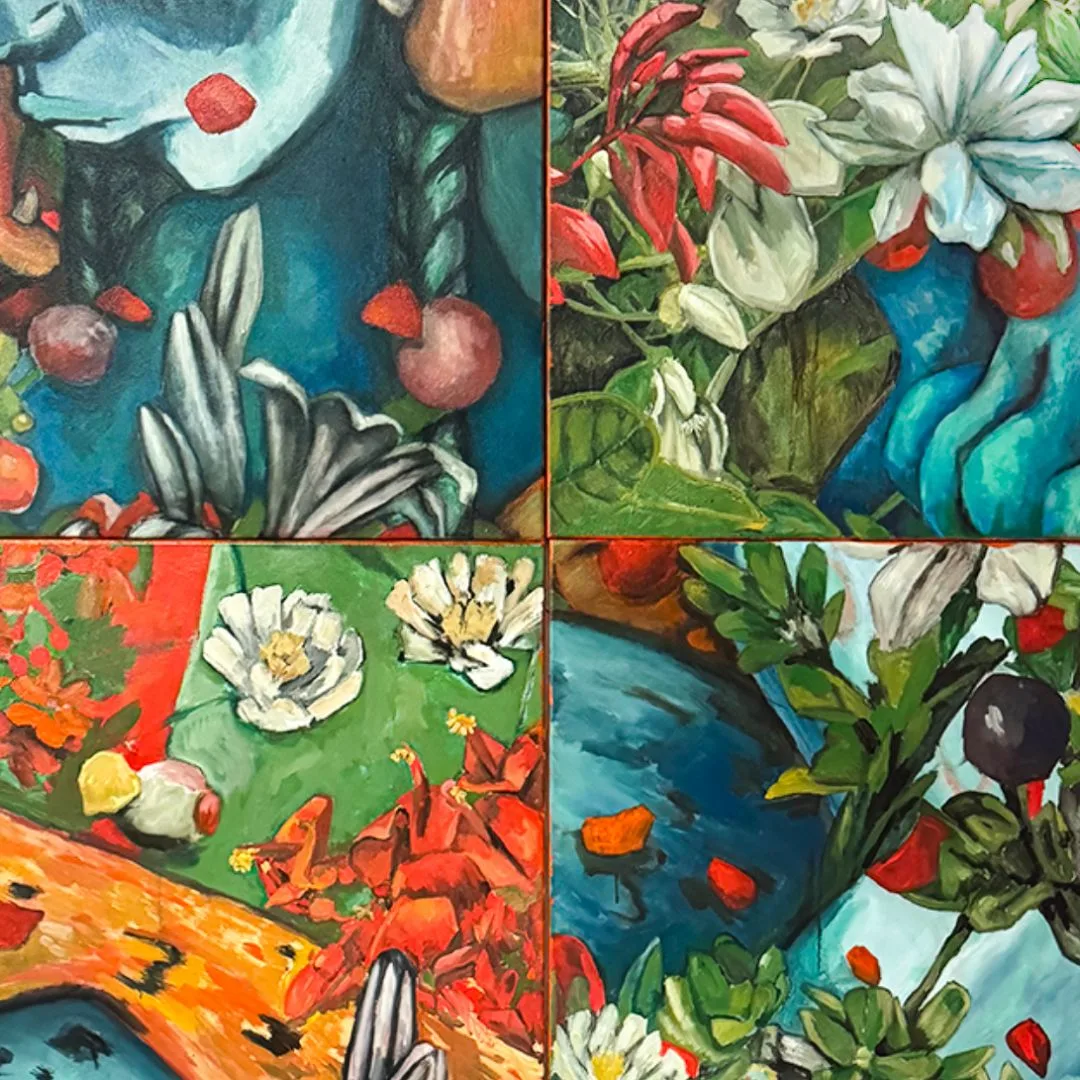
JUAN MANUEL ROZAS
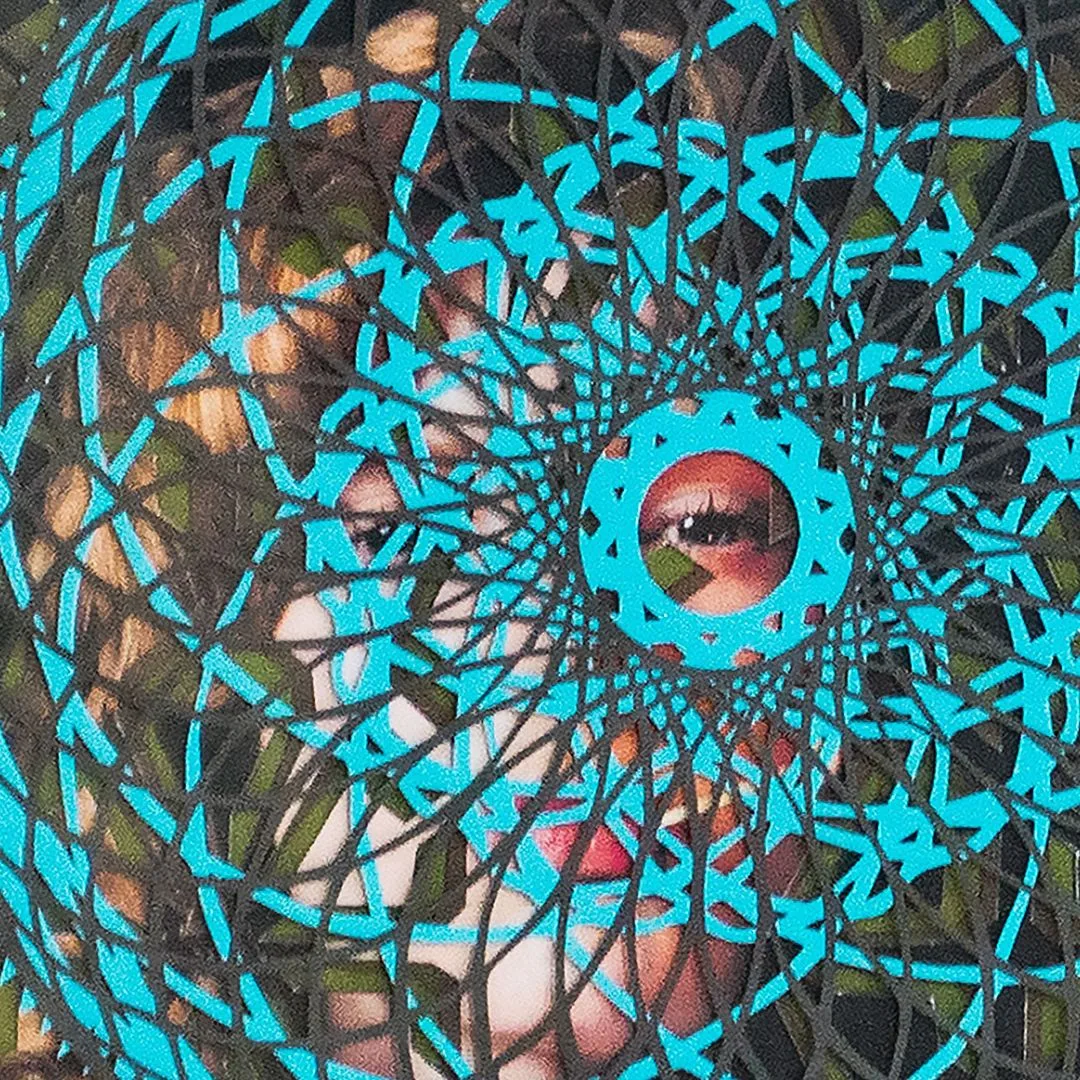
PATRICIO RODRIGUEZ

TELLAS
HISTORY OF PATTERNS
Historically, patterns often feature symbols that communicate their message without written language, like a sort of visual vocabulary to those who understand. However, for those who do not know the significance, it is easy for the meaning to be lost and assume that the patterns are meant for beauty alone. Perhaps this led to a surface level appreciation of patterns, as without the knowledge of their depth, they can easily be viewed as just decoration.
But these patterns with a rich history can be seen all around us, even if they are taken for granted. African people from across the continent and many cultural backgrounds have braided patterns into their hair for centuries, the cornrow being one of the most ancient. Different designs could indicate identity, marital status, religion, or age. Oral history describes how enslaved people in the Americas brought this tradition with them, and braided maps into their hair to help guide them to freedom.
Quilts across the United States, especially in Appalachia, are laden with geometric symbols indicating faith, family, and ancestral stories. Likewise, Diné (Navajo) tapestry weavings describe the spiritual stories and folklore which shaped their culture. Patterns signify heritage and lineage, the continuation of cultural identity, such as the Ghanian Kente cloth, the tartan kilts of Scotland, and the tā moko (tattoos) of the Māori people.
Specific colors, shapes, and their placements each tell a different story. Many of the elements which make up a design are inspired by the natural world, where patterns are first found. For instance, the fibonacci sequence, a mathematical equation that manifests as a spiral, similarly seen in the structure of shells, pinecones, sunflowers, and even galaxies. These motifs are the bedrock of pattern design across cultures.
Islamic art is also exemplary of this type of pattern, as it utilizes florals to celebrate the nature of divinity. Mosques feature intricate designs called arabesques which mimic foliage. Muqarnas, a type of wall niche, take the architectural form of honeycombs and even more patterns decorate each separate ‘comb’. These naturally-inspired adornments culminate in buildings like the Shah Mosque (Isfahan, Iran), the cross-culturally influenced Moorish-Iberian Alhambra Palace (Granada, Spain), and the Indo-Islamic Taj Mahal (Agra, India).
Patterns in the modern age developed with styles like Art Deco, which was created in the 1920s to represent the aesthetic of future industry. Merging influences like Egyptian and Aztec patterns, as well as new movements like Cubism and Bauhaus, this style emphasized clean lines and abstracted forms. Moving away from nature, patterns were more implied rather than literal. For this reason, designers began to focus on rhythm instead of exact replication of shapes.
This merging of styles leads to the cross-cultural exchange at large which can be seen through patterns. As the world globalized and trade routes expanded, people were inspired by the aesthetics they encountered. This wasn’t always mutually beneficial, as the designs were sometimes morphed beyond their original meanings, which lessened their significance in popular knowledge and direct connection to their origins.
CROSS-CULTURAL EXCHANGE
Chinoiserie patterns, for example, are sometimes recognized as culturally English. Scenes of Chinese royals, dragons, pagodas, birds, and pavilions decorated 18th century manors wallpapers, vases, and upholstery. The style’s popularity grew from organic exchange, but when demand exploded the English began imitating the style with reproductions.
However, without a full understanding of the designs’ meanings, they were adapted to English sensibilities, misattributed and merged into one generic style. Still, their popularity in a place so far across the world indicates the interaction of cultures. The pattern’s presence there acts as anthropological evidence that cements the connection, one that occurred through colonization. Even if common memory forgets, pattern intertwines cultures through their aesthetic coalescence.
SPIRTUALITY AND REPETITION
Aside from decoration, patterns often embody spiritual and religious significance. As a form of abstraction, patterns have the power to tap into hidden reverberations in the subconsciousness and energetic realms. They tell a story without a clear beginning or end. And thus, this encourages viewers to think beyond linear boundaries. Repetition can evoke meditative, melodic, or hypnotic states.
Visual representations of these can be seen through mandalas and depictions of the Aboriginal Ngarranggarni (The Dreaming). Through repetition and sinuous shapes, they evoke the meditative state in which the mind can wander past physical reality into the realm of the spirit. Pan-Andean patterns like the Chakana cross represent life, death, and the celestial planes. It also acts as a practical guide for key dates in agriculture and ceremonies throughout the year. This is yet another symbol seen across cultures which holds sacred meaning from the Americas to Saudi Arabia to Uzbekistan.
ARTISTS
Patricio Rodriguez accesses this esoteric element through his patterns. Spirals and complex webs of lace-like structures symbolize the neural connections of our brain’s capacity for spirituality. But his pieces remain connected to the biological weavings of blood vessels and plant roots.
Juan Manuel Rozas taps into this connection of nature and mythos as well, inspired by the legend of the Uturunku tiger-man, the spots of the creature symbolize the power between worlds of human and spirit.
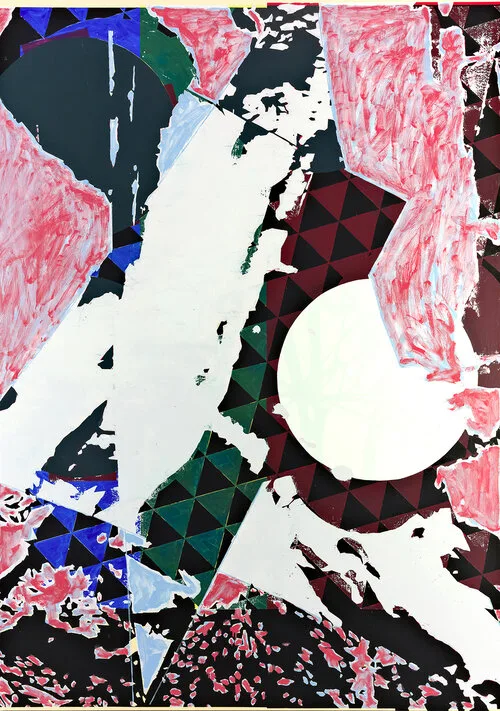
Bayona channels divine energies through sacred geometry seen in various indigenous Andean cultures, as well as world-wide ones, which feature pattern in a deeply spiritual way.
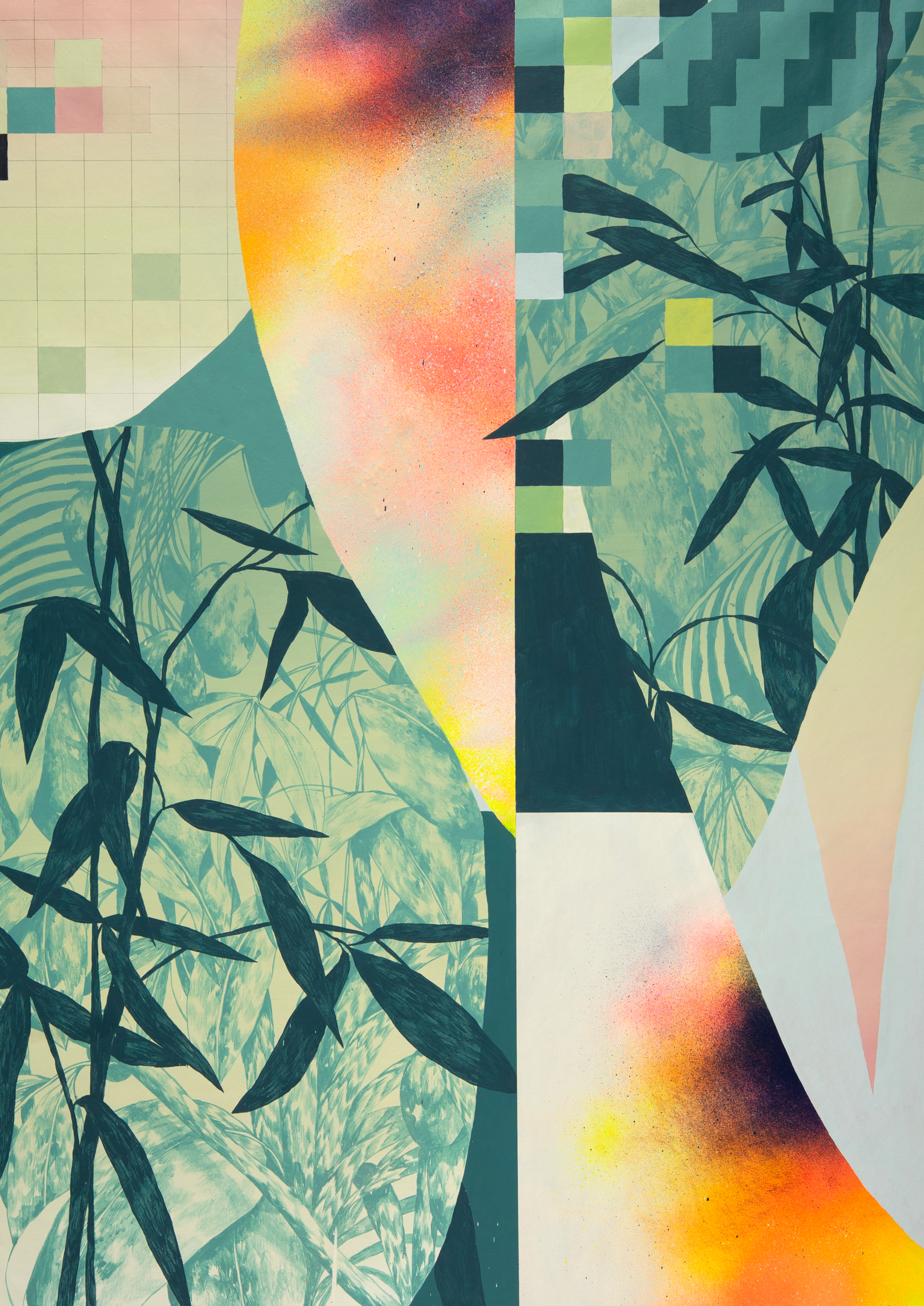
Jered Sprecher’s use of repetition appears in the clash of the natural world and the digital one. His depictions of flower petals collide with the harsh lines of a screen—the pixelation a different form of pattern manufactured by machines.
Tellas, on the other hand, finds more synthesis between these motifs. His botanical patterns exist alongside straight-edged grids in a more harmonious composition between contrasting elements.
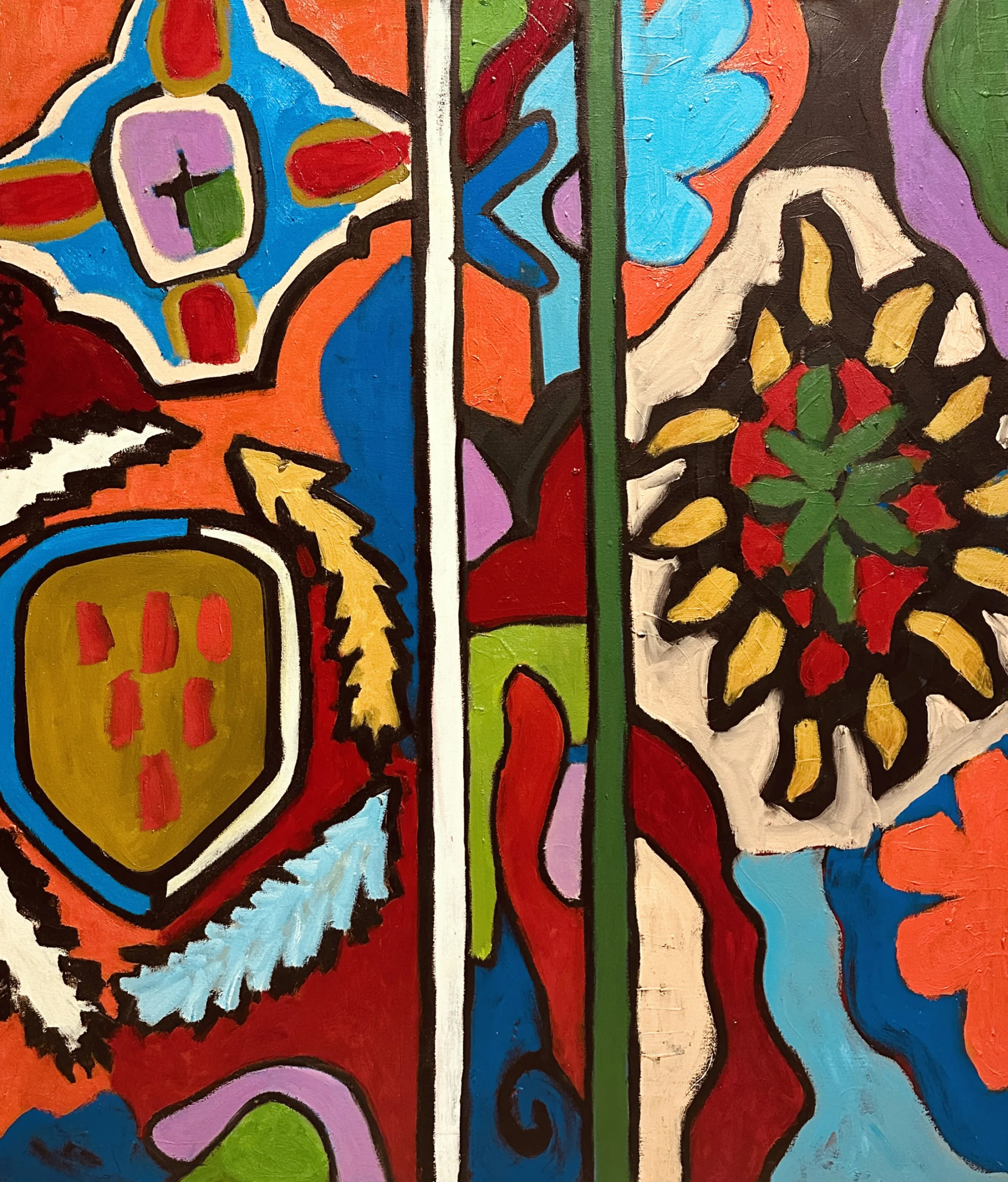
Basmat Levin incorporates patterns into her works as a bold backdrop to contextualize her subjects and their cultural connections, invigorating them with the confidence they exude.
In summary, every pattern has a meaning, a history, and a message. The closer you look the more there is to uncover. Patterns universally connect people, no matter how far away geographically or how different their beliefs, it is an impulse practiced by all.